
The independent heating and cooling company across Hampton Roads and coastal Virginia
Noises From the Condenser and What They Mean
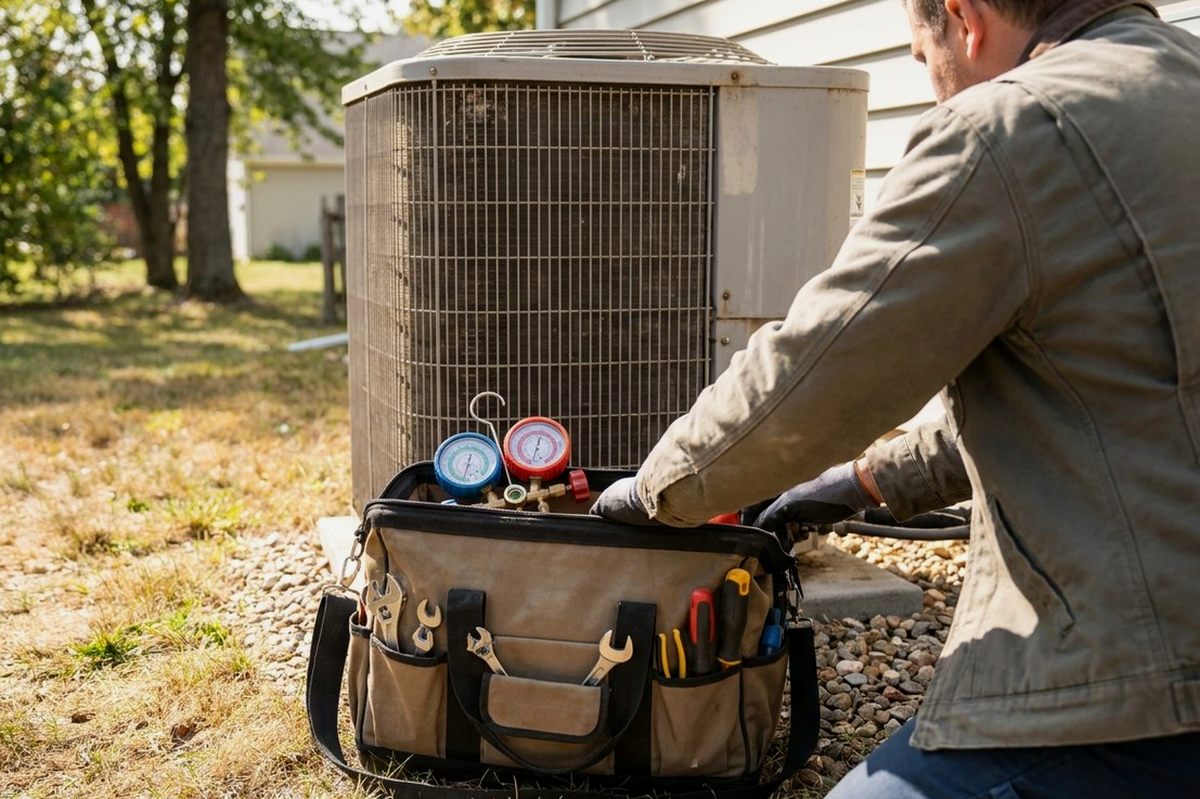
Your outdoor unit used to hum. Now it buzzes, rattles, or lets out a screech every time it kicks on, and you are standing in the yard wondering if it is about to quit. We repair noisy condensers and full air conditioning systems for homeowners across the region. Shut the system off at the thermostat if the noise is loud or metallic, then call us.
Call (888) 381-2953- A real person answers
- Open 7 days
- Written quote before work starts
Taking calls until 5:00 PM ET
By our service team · vetted by the techs who do this daily
What the Noise Is Actually Telling You
Sound is the cheapest diagnostic tool we have. A buzz usually points to something electrical, a contactor chattering or a capacitor on its way out. A rattle is almost always mechanical, loose panel screws, a bent fan blade, or gravel and mulch that got sucked against the coil. A screech or squeal is metal on metal, a fan motor bearing or a compressor under strain. A hard clank or grinding is the one to take seriously, because it often means a part has come loose inside the fan shroud. Note when the noise happens, at startup, all the time, or only at shutdown. That timing narrows the repair fast.
Cause Family One: Debris and Loose Hardware
This is the cheapest fix and the most common cause of rattling. Condenser cabinets are sheet metal held together with screws, and years of vibration back them out. A single loose screw against a panel sounds alarming and costs almost nothing to correct. Add in what our climate throws at these units, pine straw, storm debris, grass clippings from the mower, and the odd stick that finds its way past the fan guard. Coastal and low-lying properties get salt and grit packed into the coil fins too, which restricts airflow and makes the fan work louder than it should. Clearing the cabinet and retightening hardware often ends the noise on the spot.
Cause Family Two: Electrical Buzzing
A steady buzz or hum with no cooling usually means the contactor or the run capacitor. The contactor is a switch that pulls in every time the system calls for cooling, and its contacts pit and burn over time. When they do, it chatters instead of closing cleanly. A weak capacitor makes the compressor or fan motor struggle to start, which produces a low hum followed by a click as the overload trips. Humidity and salt air in this part of the country corrode these parts faster than in a dry climate. Both are small components. Neither is something to poke at, because capacitors hold a charge even with the power off. That work stays with a technician.
Cause Family Three: Motors, Bearings, and the Compressor
Screeching and grinding come from moving parts wearing out. Fan motor bearings dry up and squeal, worst at startup, and the sound gets steadier as the bearing fails. A bent fan blade, often from something striking it, produces a rhythmic whup or a vibration you can feel on the cabinet. Compressor noise is the expensive end of this list, a metallic growl or a loud clatter that says internal components are worn or the unit is running under high pressure. If the compressor is screaming, shut the system down and call us rather than letting it run. Continuing to run a failing compressor turns a repair into a replacement more often than not.
What You Can Safely Check, and What We Do Differently
Safe homeowner checks are short. Turn the thermostat to off and confirm the noise stops. Look for a tripped breaker. Change a dirty filter and make sure supply and return vents are open. Walk around the outdoor unit and clear leaves, grass, and anything leaning against it, keeping about two feet of open space. That is where it ends. Do not open the electrical panel, touch refrigerant lines, or spin the fan by hand. On our end, we pull the disconnect, check capacitor microfarads and contactor condition under load, measure motor amp draw against the nameplate, inspect the blade and bearings, and read system pressures to see whether the compressor is straining or the part is simply worn out.
Noises From the Condenser and What They Mean — what people ask
Can I keep running the AC if it is just rattling?
A light rattle from a loose panel is usually safe for a day or two. Grinding, screeching, or loud metallic banging is not. Shut it down at the thermostat and call for air conditioner repair before the damage spreads.
Why does my outdoor unit buzz but the fan never spins?
That pattern usually points to a failed run capacitor or a stuck contactor. The motor is getting power but cannot start. Turn the system off so it stops drawing current, then have a technician test and replace the part.
Does salt air really damage an outdoor unit?
Yes. Salt accelerates corrosion on coil fins, cabinet fasteners, and electrical contacts, which is why coastal systems develop buzzing and rattling sooner. Regular coil rinsing and annual inspection slow it down considerably.
How it works
- Step 1
Tell us the symptom
Call or fill in the quote form. We ask what changed, when it started, and what the thermostat reads against the actual room temperature. That short conversation tells us what parts to load on the truck.
- Step 2
We diagnose on site
A technician checks the thermostat, the electrical side, airflow through the filter and coil, refrigerant behaviour and the outdoor unit. You get a plain explanation of what failed and why, before any work starts.
- Step 3
Repair and verify
We make the repair, then run the system through a full cycle and measure temperatures at the supply and return. If something upstream caused the failure, we tell you so it does not repeat.
- A real person answers
- Open 7 days
- Written quote before work starts
Why homeowners call us
- We know salt airCoastal homes lose condenser coils to salt corrosion years before inland systems do. We look for fin damage and pitted line sets on every visit, because a clean-looking unit can still be shedding capacity from the outside in.
- Humidity is part of the jobHurricane-season air loads a system in ways a temperature reading will not show. If your house feels clammy at 74 degrees, we look at run times, airflow and drainage rather than just adding refrigerant and leaving.
- Crawlspace realitiesHigh water tables mean wet ground under ductwork, rusted plenums and condensate lines with nowhere good to drain. We check what is happening under the floor, since that is often where comfort problems actually begin.
- Straight answersWe tell you what failed, what it will take to fix, and whether a repair makes sense on an older system. No pressure to replace something that has honest years left in it, and no vague diagnosis.
- All major brands, gas & electricIndependent service on Carrier, Trane, Lennox, Goodman, York and the rest.
- Straight answersWhen a replacement beats a repair, we tell you, sometimes before we roll a truck.
About this guide
Safe checks done and it still misbehaves? That's a real fault
Bring your notes from the checks to the call and booking takes no time.
- A real person answers
- Open 7 days
- Written quotes
- All major brands
- Gas & electric
Rather not call? Get a free quote →